Homemade kôso: a living fruit elixir
Nectars, Potions & Elixirs
Homemade kôso: a living fruit elixir
A simple, almost primitive recipe: fruit, sugar, time. Kôso is a raw fermented syrup, intense and alive. It belongs as much to pleasure as it does to patience. And it deserves to be told honestly: yes, it is sugar. But not a soulless industrial syrup.
The principle of kôso
The third ingredient is not decorative. It is what slowly transforms the mixture, day after day, through a living maceration, a gentle fermentation and a daily gesture.
Nothing is forced. The sugar melts, the fruit releases its juice, the aromas evolve. Kôso does not become “sugar-free”. It becomes more complex, more aromatic, more alive.
What is kôso?
Kôso is generally described as a Japanese fermented syrup made by macerating fruit, vegetables or plants with sugar. In principle, it is close to other Asian fermented syrups such as Korean cheong.
Unlike kefir or kombucha, kôso does not rely on a specific culture such as grains or a SCOBY. It is a more accessible preparation, driven by juice extraction, sugar, naturally present microorganisms and time.
The health benefits of kôso should be framed with caution. There is evidence on the general interest of fermented foods for microbiome diversity, but I do not know of any solid clinical study demonstrating specific benefits of kôso itself.
The basic recipe
Most fruits
Ratio 1:1
1 part fruit to 1 part sugar.
Citrus fruits
Ratio 1:1,1
1 parts fruit to 1,1 part sugar.
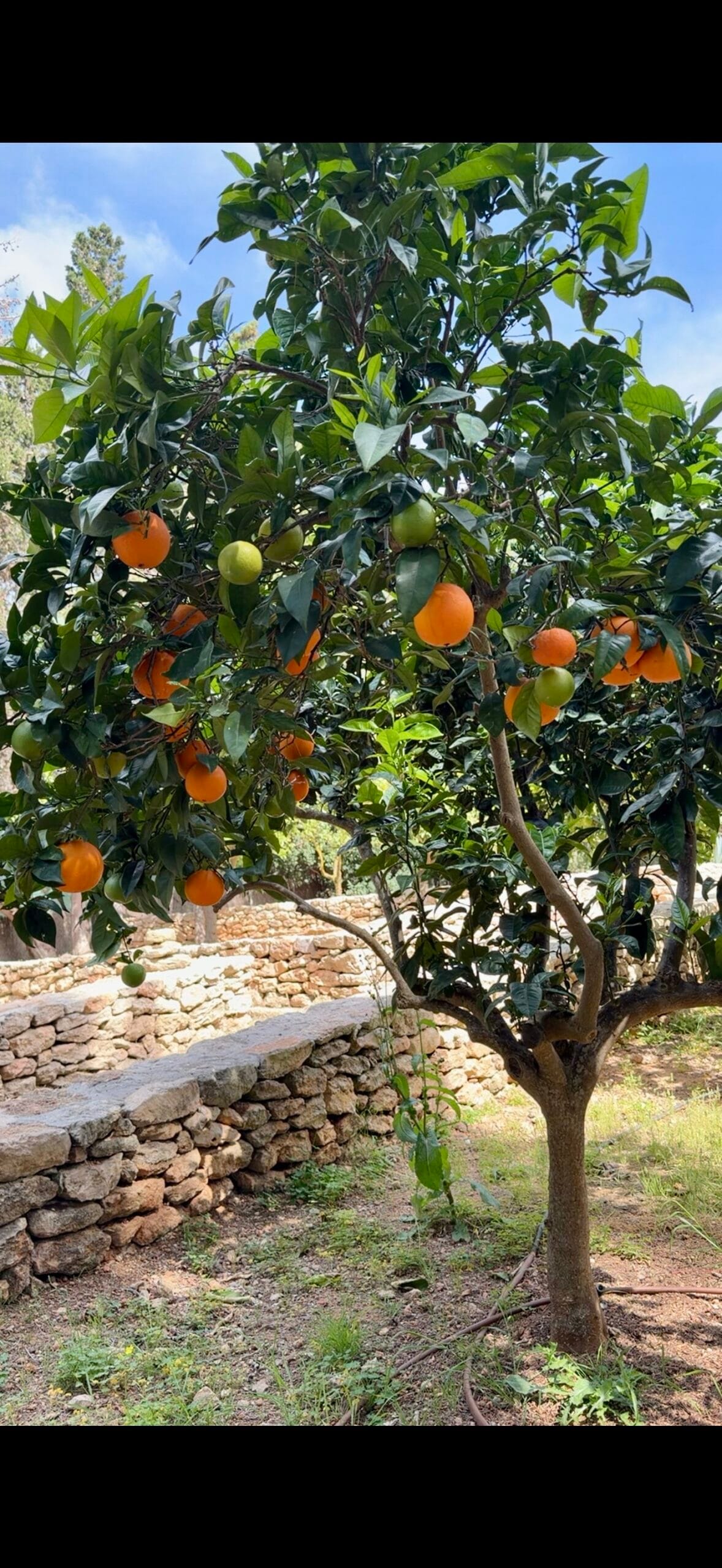
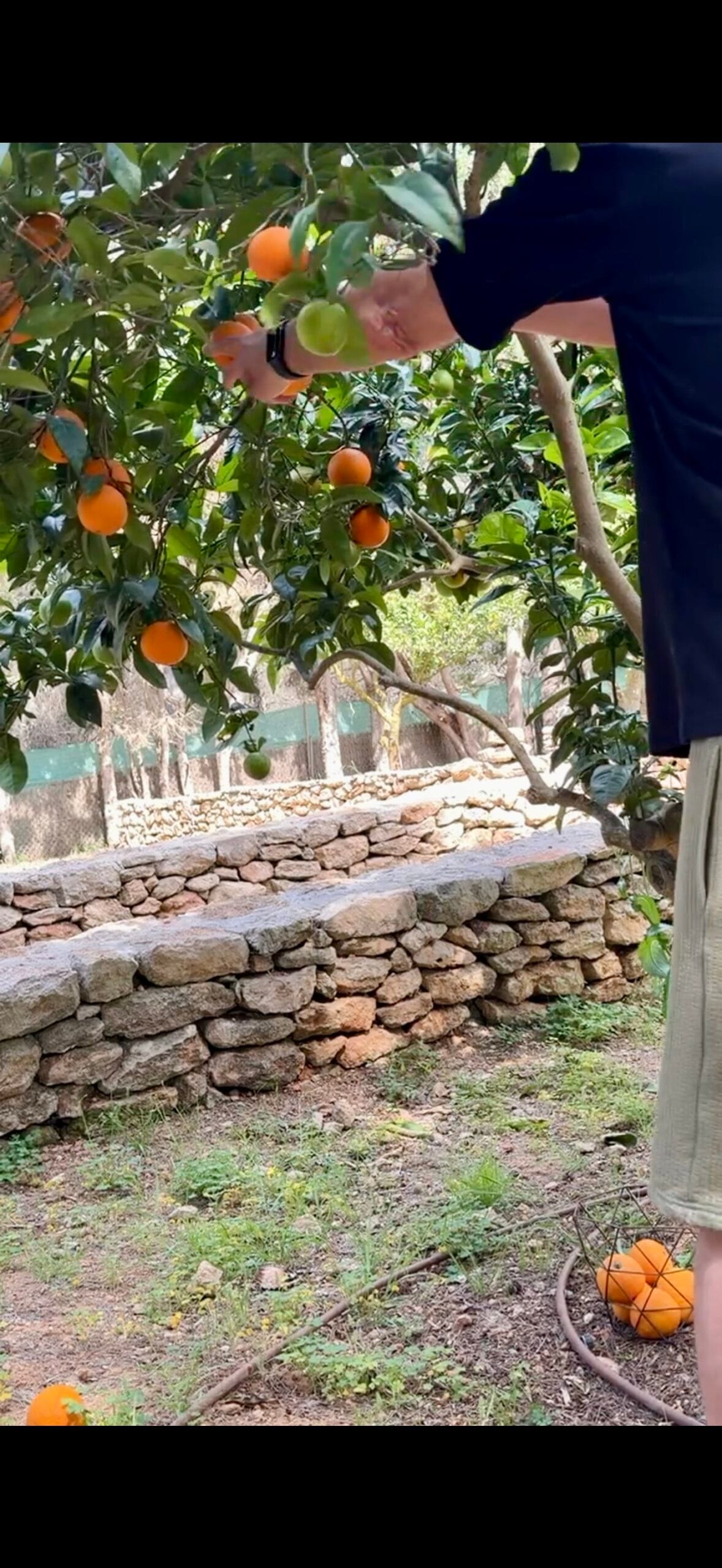
For this version, I used orchard oranges and garden rosemary. The result is sunny, resinous, deeply Mediterranean.
Ingredients
- Fresh fruit, ideally untreated or carefully washed
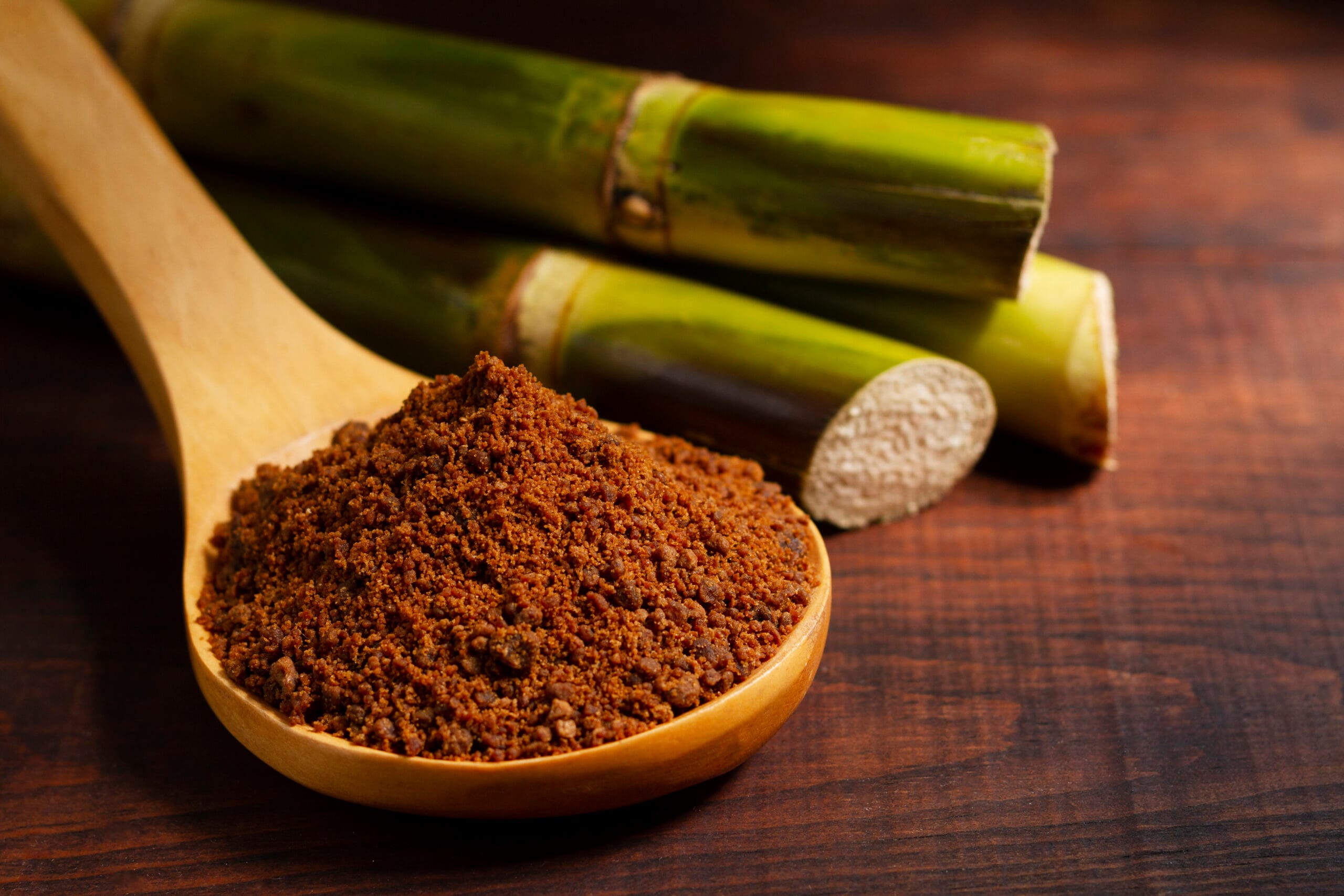
- Brown sugar, panela, muscovado or blond sugar
- Aromatics of your choice: rosemary, basil, lavender, sage, thyme
- A large clean jar
- A piece of gauze or breathable cloth
It technically works, but it brings almost nothing to the flavour. Brown sugar, panela or muscovado are not “less sugary” metabolically, but they are more aromatic, less neutral, and more coherent with an artisanal preparation.
Process step by step
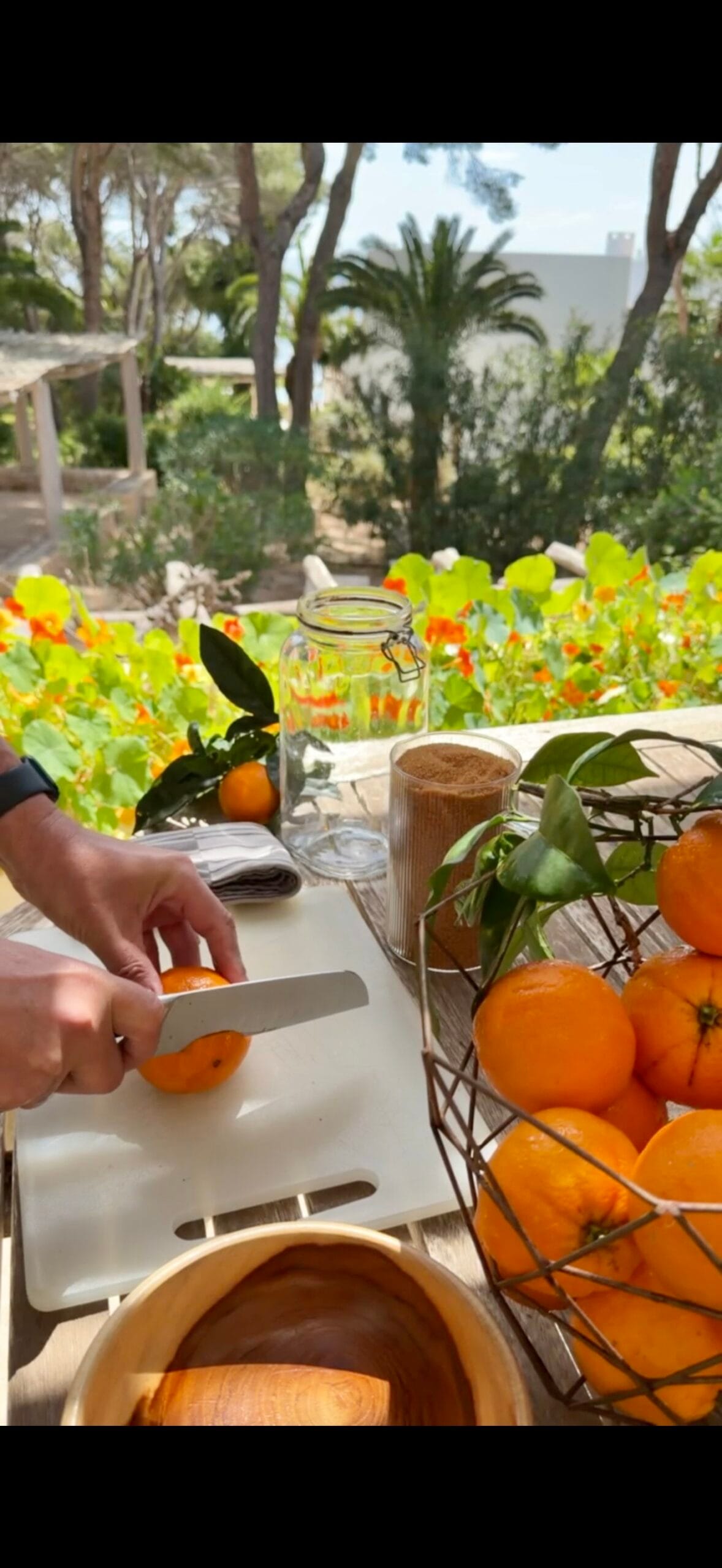
1. Prepare the fruit, sugar, aromatics and a clean jar.
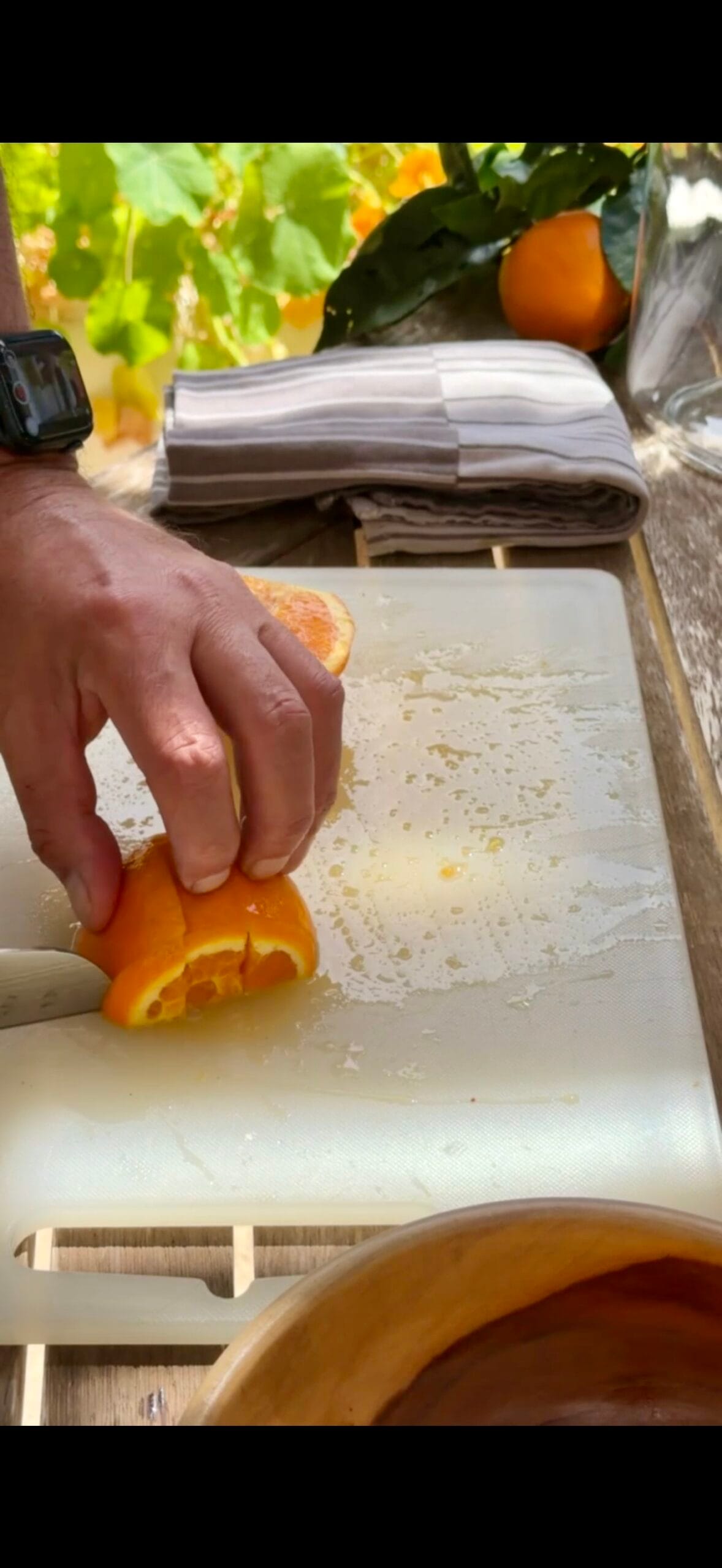
2. Cut the fruit into even pieces.
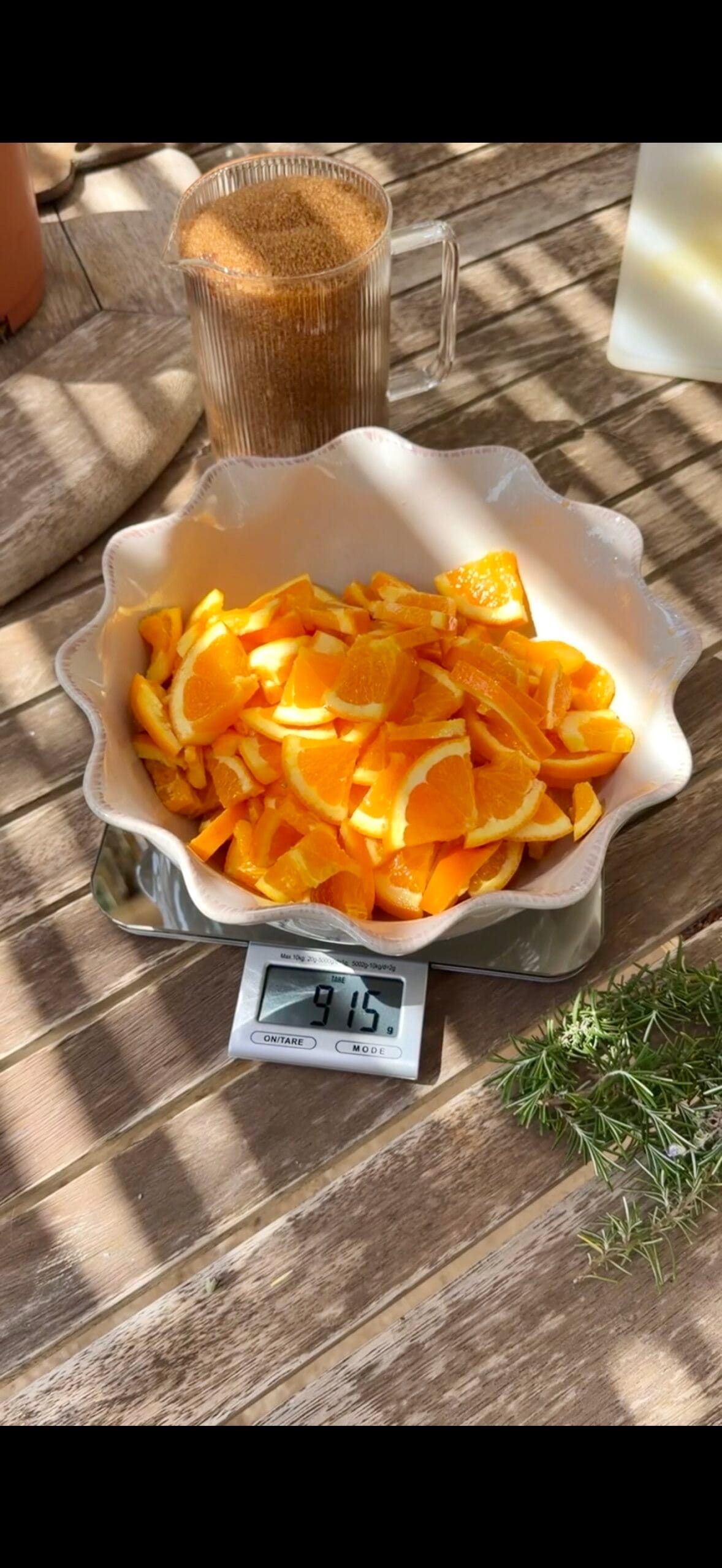
3. Weigh the fruit to respect the ratio.

4. Add the aromatics, here garden rosemary.
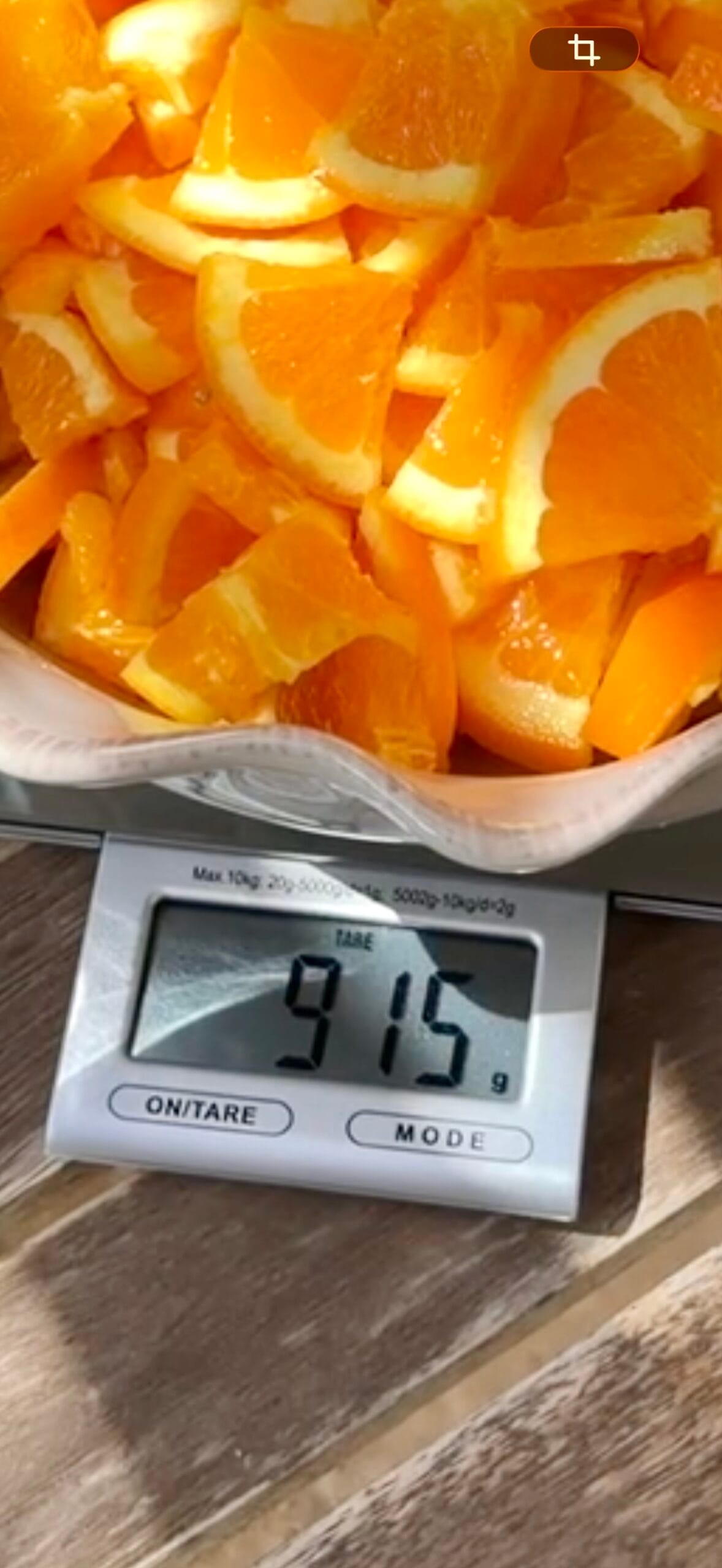
5. Weigh the sugar according to the chosen ratio.
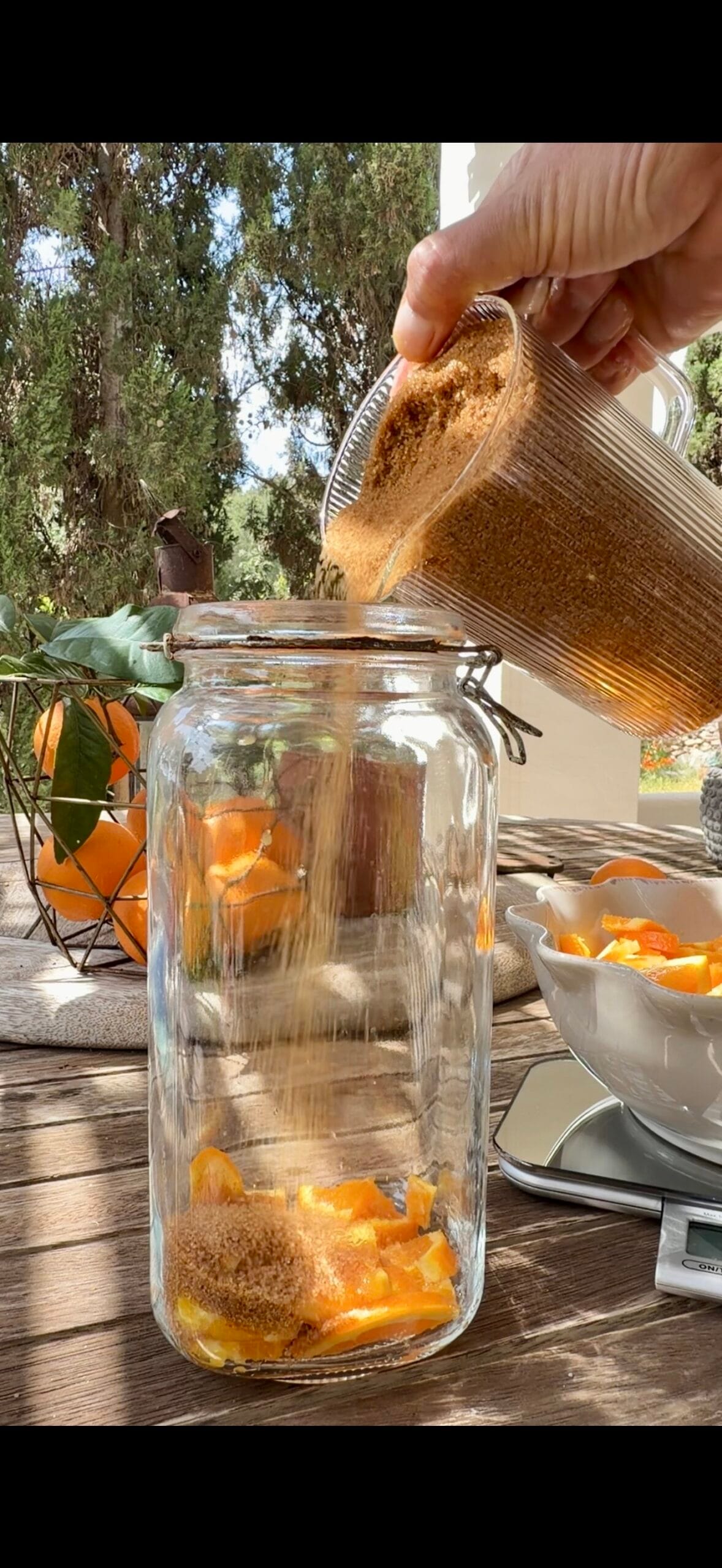
6. Alternate layers of fruit and sugar.
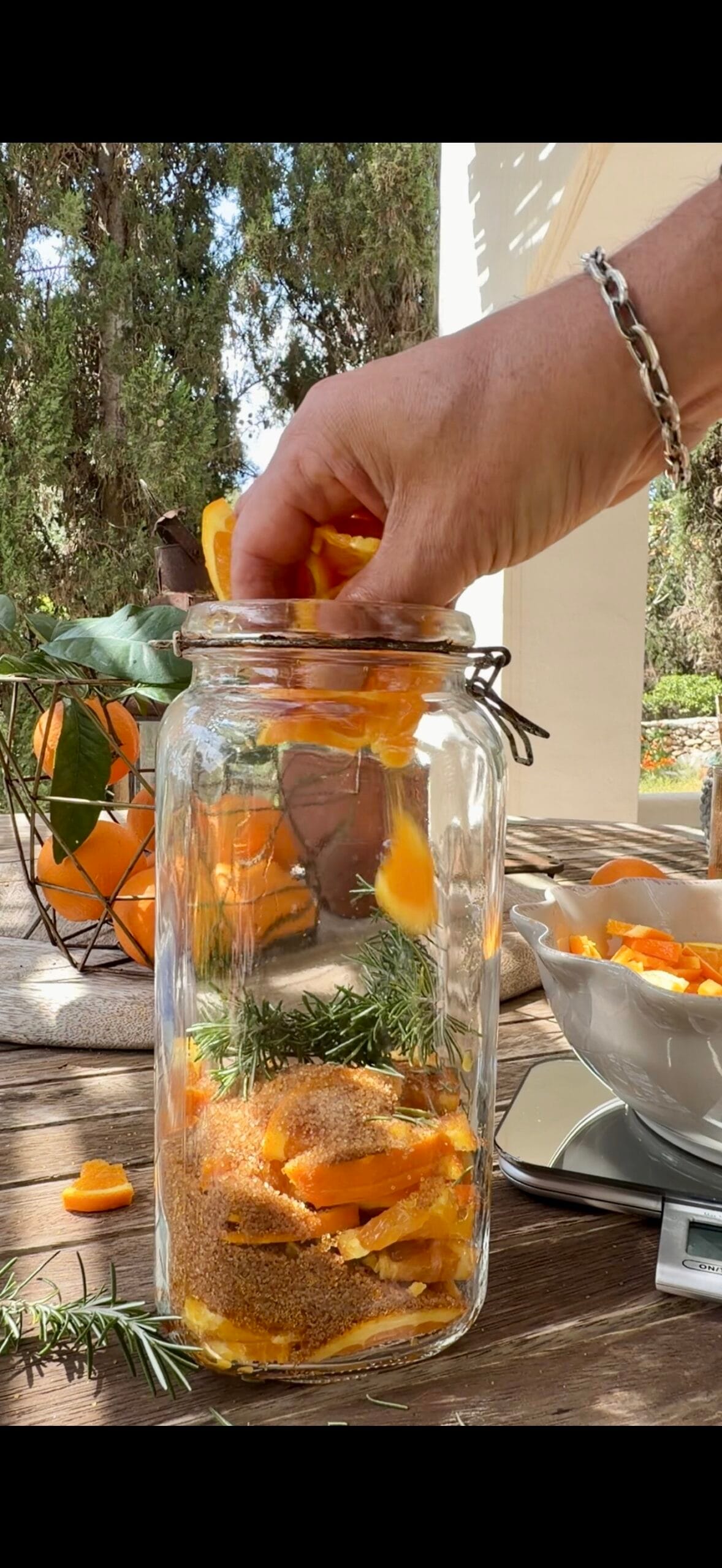
7. Fill the jar without packing it too tightly.
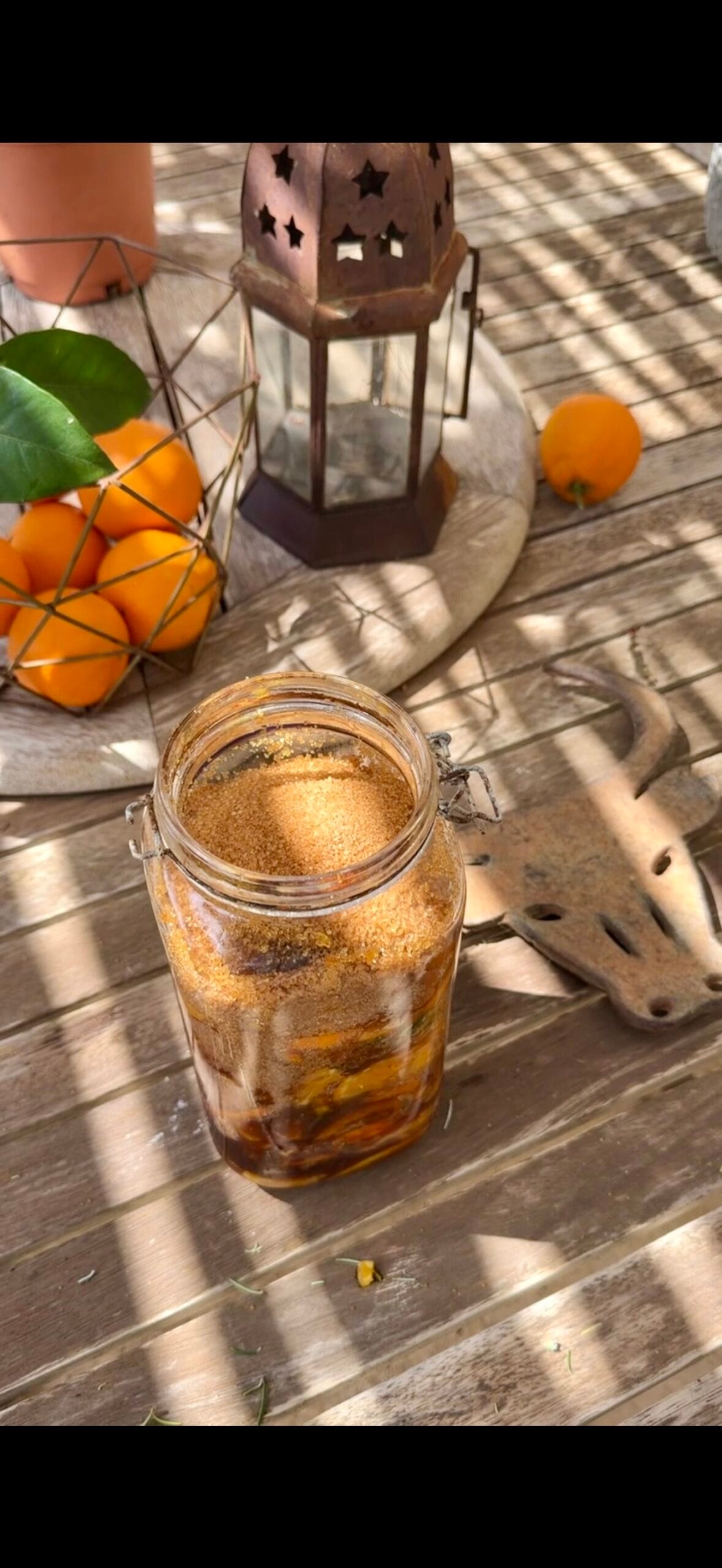
8. Check that the sugar is well distributed.
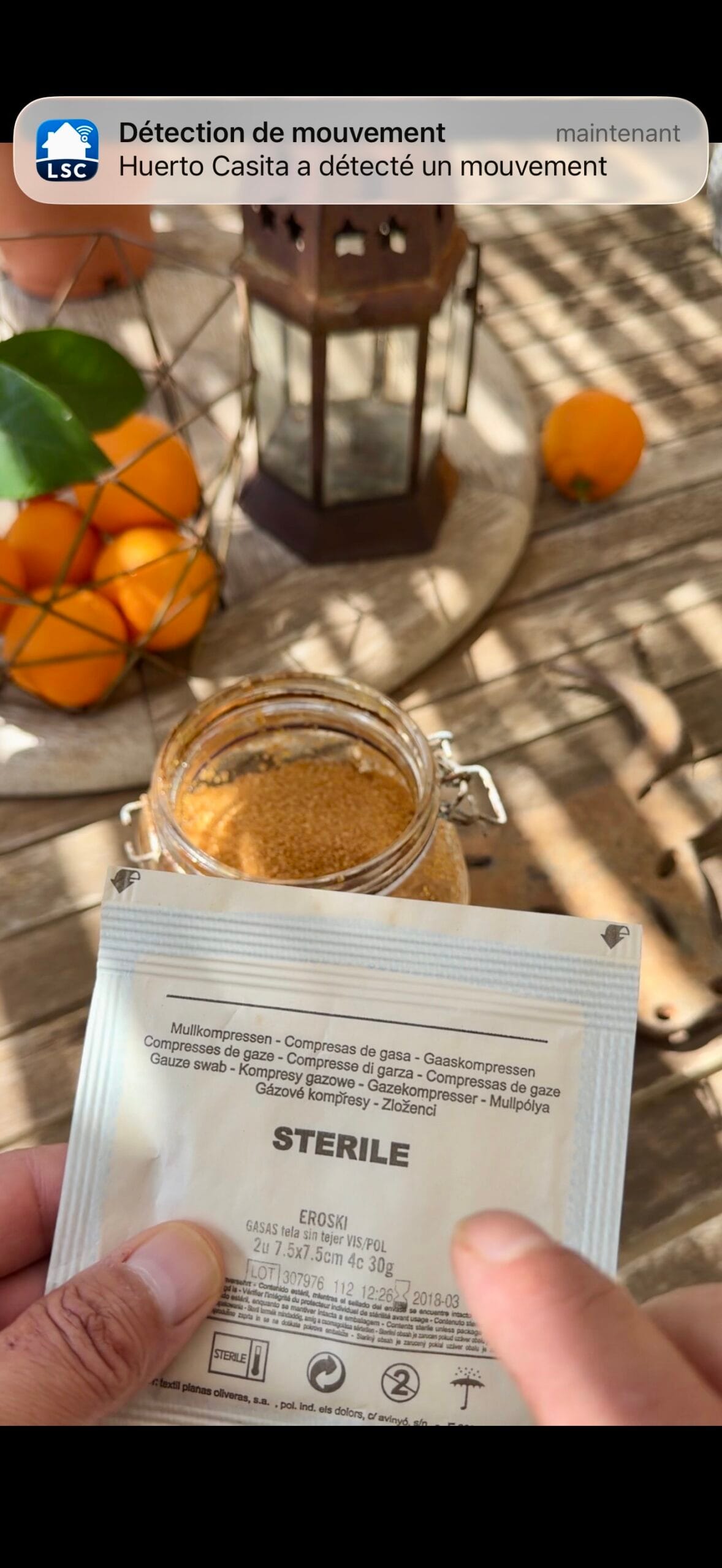
9. Stir gently, then cover with gauze.
The jar then rests for about 7 days at room temperature, away from direct sunlight. Stir it every day with a clean utensil to help the sugar dissolve and prevent the fruit from remaining exposed on the surface.
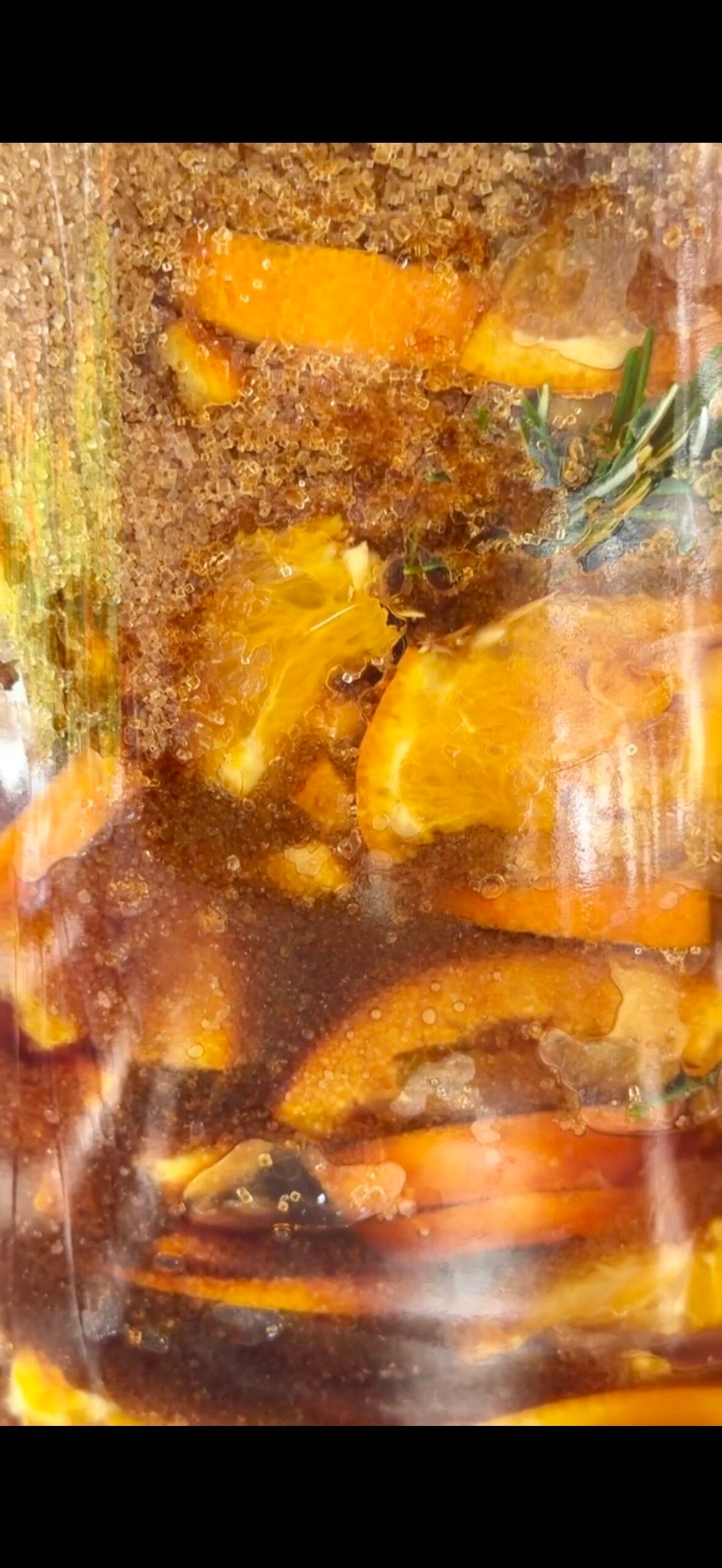
10. The juice begins to form.
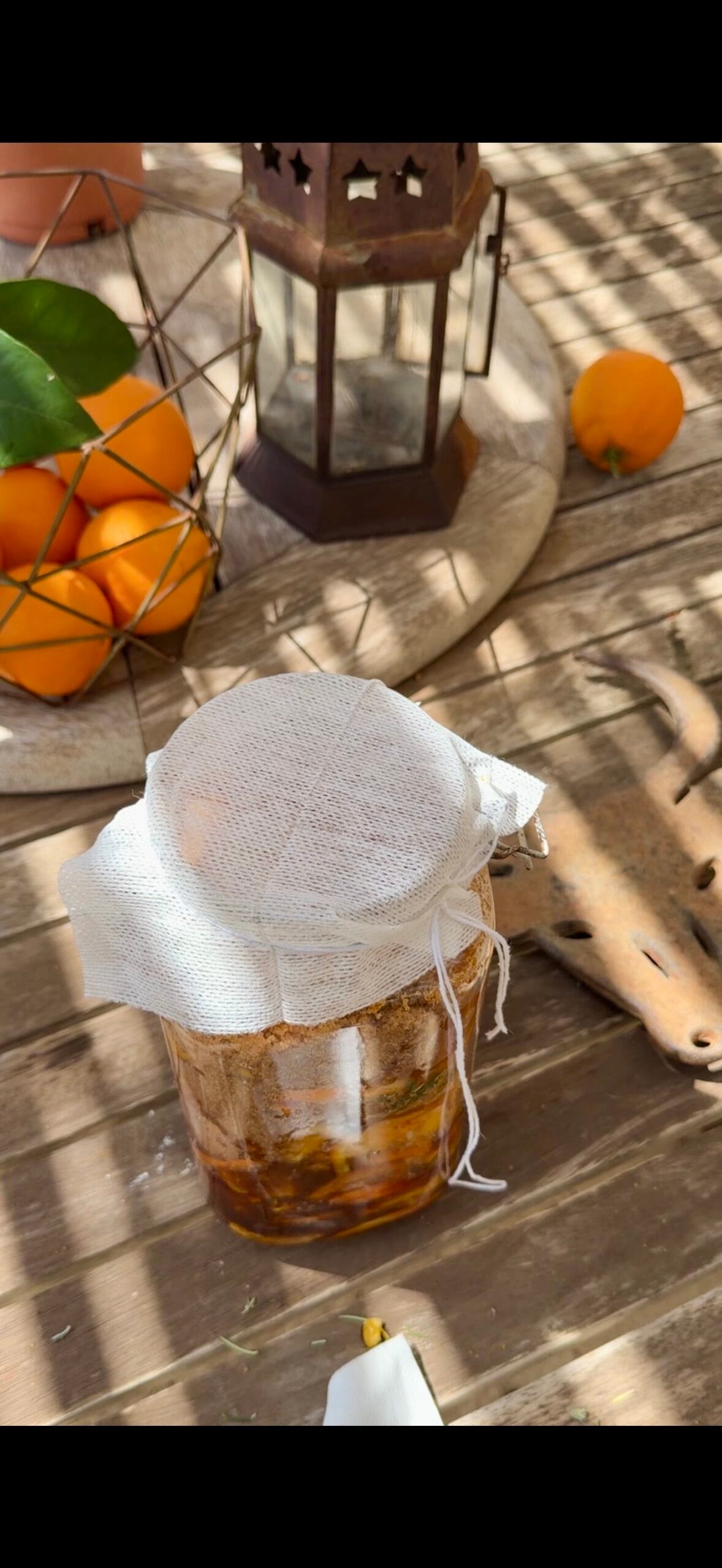
11. The gauze protects while allowing the mixture to breathe.
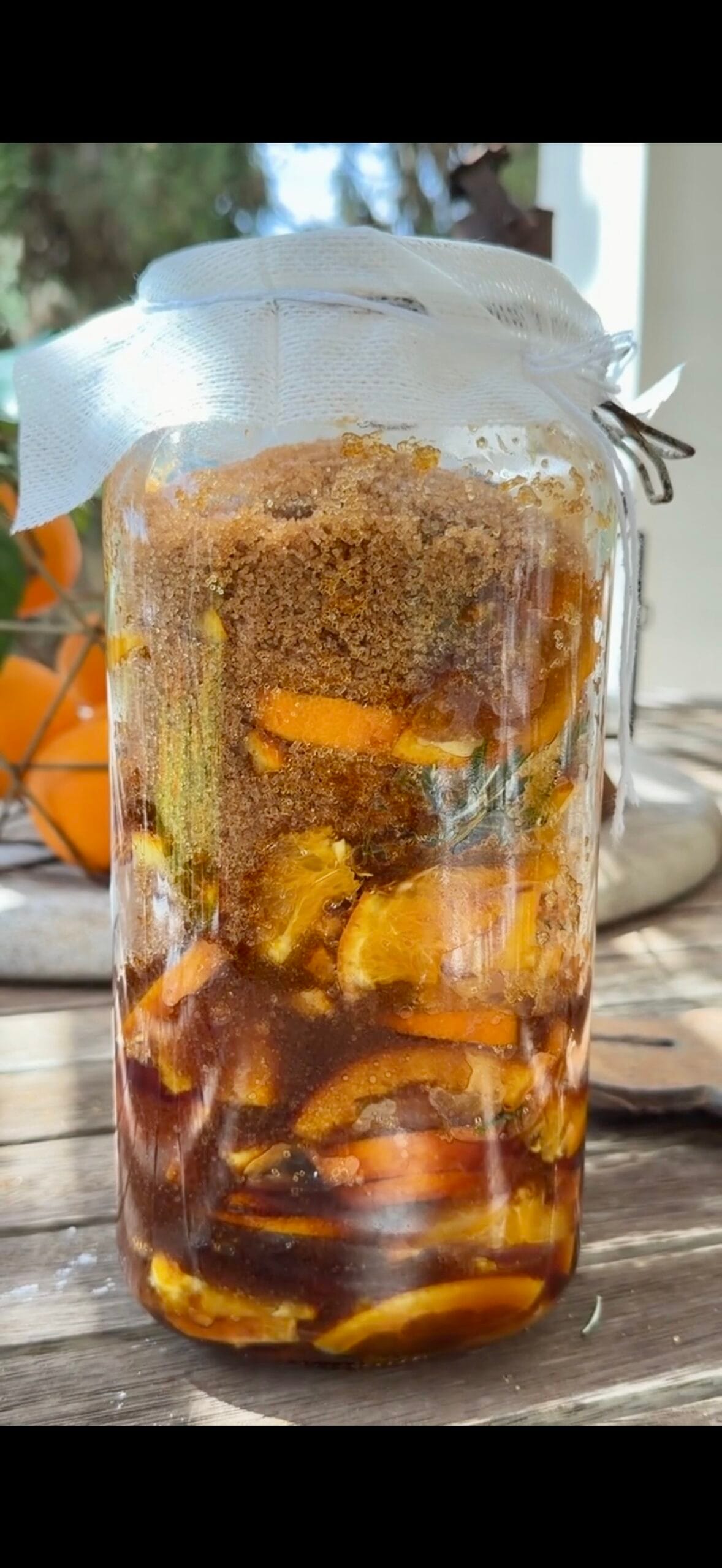
12. The jar is ready for 7 days of observation.
What is actually happening
Sugar draws water out of the fruit: this is osmosis. The liquid gradually forms, aromas move into the syrup, and a light fermentation may begin.
The result is a raw, fragrant, living syrup. But the sugar is still very much present. Kôso is not a “detox” drink, nor a health supplement. It is a pleasure elixir, to be used in small amounts.
Kôso, sugar and honesty
Yes, kôso is sweet. But it remains very different from an industrial supermarket syrup: no artificial flavours, no colourings, no opaque formula, no long list of additives.
The difference is therefore not the glycaemic load. It lies in the quality of the ingredients, the simplicity of the preparation, the freshness of the taste and the relationship to the gesture.
The best way to reduce the sugar impact is not to break the recipe: it is to dilute more. A small spoonful in a large glass of cold or sparkling water is often enough.
How to use kôso
Drinks
Cold water, sparkling water, mocktails, cocktails, cold infusions.
Desserts
Yoghurt, fromage blanc, vanilla ice cream, panna cotta, fresh fruit.
Baking
The macerated fruit can be used like homemade candied fruit.
Cooking
A touch in a vinaigrette, marinade or sweet-and-sour sauce.
Variations to try
The rule stays the same: ripe fruit, sugar, time. Then everything depends on the choice of herbs, the season, and the intention.
Common mistakes
- Reducing the sugar too much: sugar contributes to extraction, texture and stability.
- Sealing the jar airtight: the preparation needs to breathe, especially at the beginning.
- Forgetting to stir every day: fruit on the surface must remain in contact with the syrup.
- Using damaged fruit: fermentation does not save a mediocre ingredient.
- Confusing living pleasure with a miracle product: kôso remains a sweet syrup.
If visible mould appears, or if the smell becomes frankly unpleasant, do not try to save the jar. Discard it.
Can you reduce the sugar?
You can sometimes slightly reduce the amount of sugar, but it is not the most reliable option. Less sugar often means less efficient extraction, shorter storage and a more unpredictable fermentation.
The smartest strategy is to keep a stable recipe, then use kôso as a concentrate: very little syrup, plenty of water, lots of ice, and possibly a few fresh herbs.
See the process on video
I shared the full process, from picking the fruit to the jar ready to ferment, on Instagram: @theexpatbiohacker.
TasteAtlas, “Koso | Local Non-alcoholic Beverage From Japan” – general definition of kôso.
Revolution Fermentation, “How to Make Fermented Syrup (Koso, Cheong)” – basic principles of fermented syrups.
Harvard Health Publishing, “Do fermented foods live up to the hype?” – general data on fermented foods and the microbiome.
USDA/NIFA, “Safely Fermenting Food at Home” – general good practices for home fermentation.