Health & Biohacking › Active Ingredients & Inner Beauty
Active Ingredients & Inner Beauty
Astaxanthin Benefits: skin, antioxidant & why I use it in Spring
Among the benefits of astaxanthin, what interests me most is its antioxidant role, its potential value for the skin and its subtle support for recovery. In spring, when light returns and the body slowly comes out of winter, this active ingredient feels particularly relevant to me.
If you want to go further on this transition phase, you can also read how to reset your energy after winter with a simple protocol .
The essentials to remember
- Astaxanthin is a natural carotenoid, often derived from the microalgae Haematococcus pluvialis.
- Its benefits are mainly studied around oxidative stress, skin, light exposure and certain aspects of recovery.
- It is not a stimulant or a miracle product – it is more of a background active, subtle but coherent.
- Within a TEB routine, it fits spring better than a purely energy-boosting logic.
The return of brighter days often means more light, more time outdoors, more activity and sometimes more diffuse fatigue. That is where astaxanthin benefits become worth looking at.
Astaxanthin does not replace a healthy lifestyle, sun protection or a well-designed routine. The idea here is not to overpromise, but to understand where it can genuinely help.
Astaxanthin – what exactly is it ?
Astaxanthin is a natural pigment from the carotenoid family. It is found in certain marine organisms, and it is especially associated with the microalgae Haematococcus pluvialis, often used in food supplements.
It is also the pigment that contributes to the red-orange colour seen in certain crustaceans or salmon. So we are not dealing with an ingredient invented by marketing, but with a molecule already present in nature.
Astaxanthin benefits – why spring is the right angle
Spring is a transition period. We sometimes sleep differently, we start going out more, we are exposed to stronger light, we move more, and we often restart several habits at the same time.
This shift feels good, but it also asks the body to adapt. To me, that is exactly where astaxanthin makes sense – not as a boost, but as a simple antioxidant support in a more active season.
Astaxanthin Skin Benefits – What Really Matters
When we talk about astaxanthin benefits, the skin angle is often one of the most logical ones. This active ingredient is studied for its antioxidant role and for its potential value in the face of environmental stress, especially when light exposure increases.
I prefer to stay measured : this does not make astaxanthin a sunscreen or a cosmetic promise. On the other hand, within a spring routine, the idea of background skin support seems coherent to me.
Astaxanthin, fatigue and recovery – what we can reasonably expect
Astaxanthin is also often mentioned for fatigue, recovery and endurance. Here again, we need to stay balanced. Human data are more variable than marketing discourse suggests.
Some people look to astaxanthin for muscle recovery, others for a more stable feeling during long days, light exercise or accumulated visual fatigue. For me, the right TEB angle remains the same: a background active, not an immediate effect.
A naturally relevant angle
In a spring routine, astaxanthin can support skin that is more exposed to light and the environment. This is probably one of the most coherent angles for understanding its benefits.
A gentle support, not a strong promise
If you are looking for a dramatic result, you will probably be disappointed. If, on the contrary, you are looking for an overall support that is subtle and well integrated, astaxanthin may have its place.
Astaxanthin Antioxidant – Why It Matters for Your Cells
One of the keywords most associated with this active ingredient is simple : astaxanthin antioxidant. And that makes sense. Its interest mainly lies in this ability to fit into an approach centred on cell protection and oxidative stress management.
In the TEB universe, this makes it especially relevant alongside other broader pillars such as a colourful diet, good sleep, omega-3s, collagen or gradual sun exposure. You can also explore other natural antioxidant supplements that support skin and cellular balance.
Why I use it in my routine
I do not use astaxanthin to feel something from day one. That is not its role. Where I find it relevant is in a period when several things respond to one another:
- gradual return to sunlight
- walking, movement, getting active again
- screen work and visual fatigue
- the desire to support the skin without falling into easy cosmetic promises
- the need for a simple and coherent routine, not a spectacular supplement
In short, I mainly see the benefits of astaxanthin within the context of a well-designed seasonal transition.
If you want to explore how this fits into a broader routine, you can browse inner beauty and skin support essentials directly in The Shop.
How to take astaxanthin simply
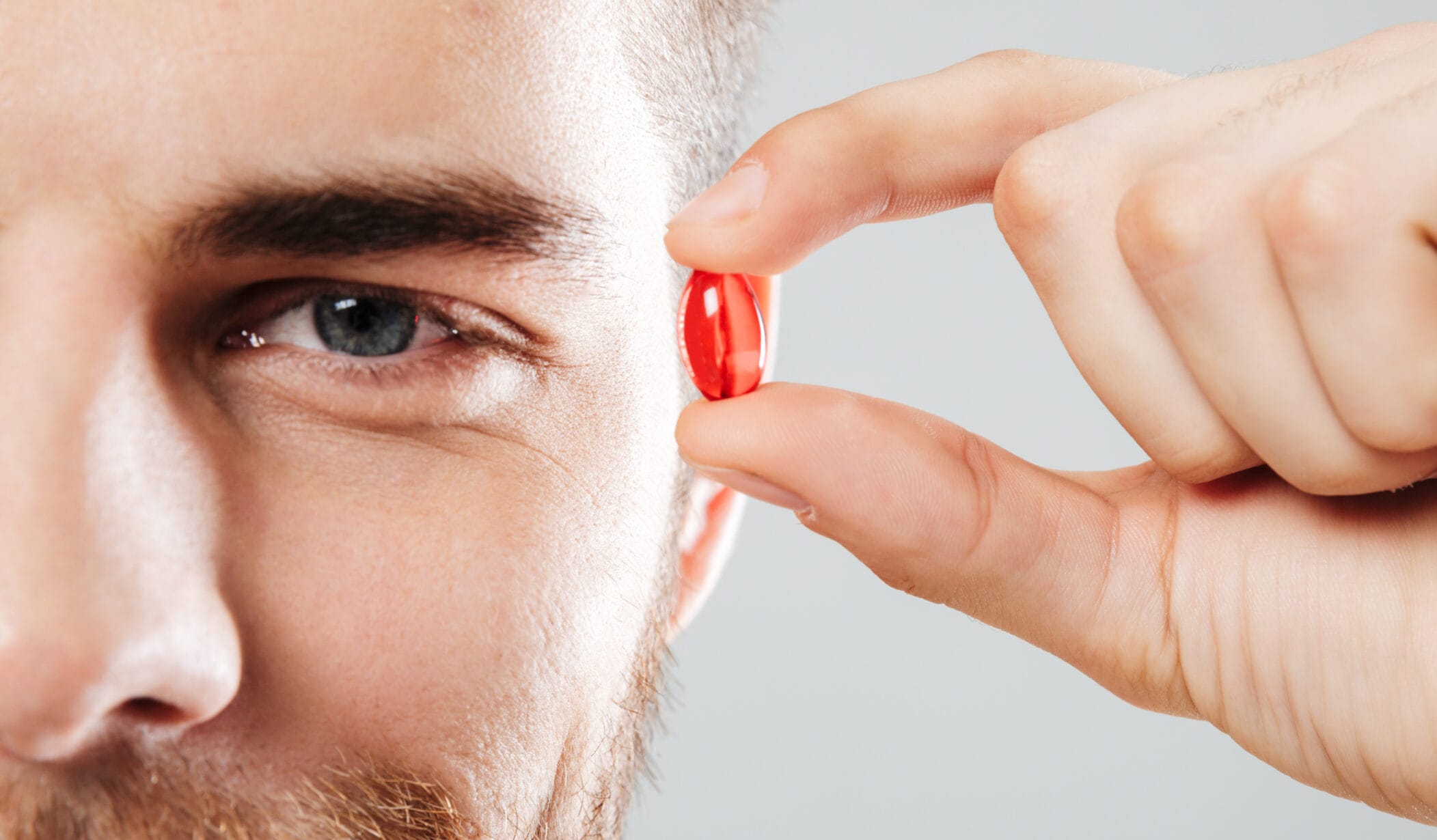
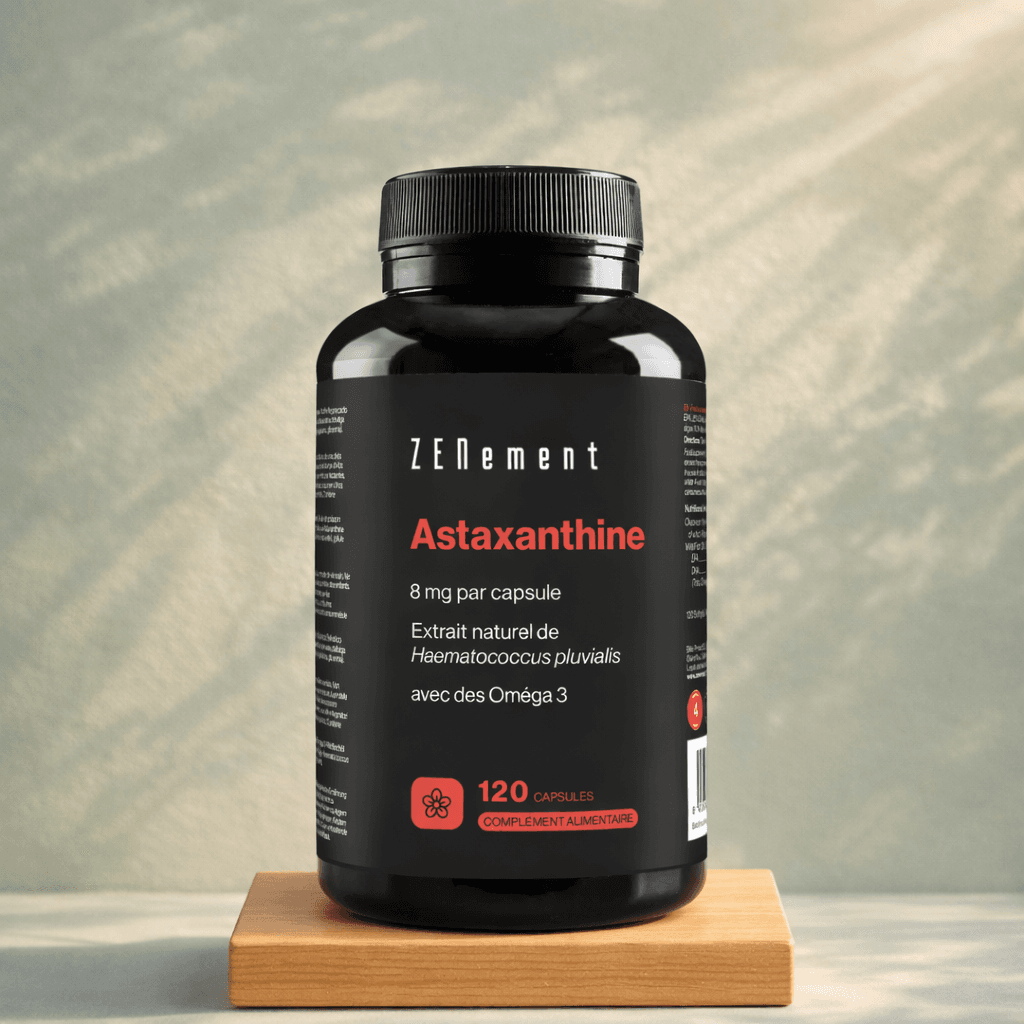
On the market, astaxanthin is often sold in low-dose capsules. The simplest approach is to follow the dosage of the chosen product and take it with a meal containing a little fat, since it is a fat-soluble carotenoid.
I find this type of active more logical in the morning or at lunchtime, in a routine that works on light, movement, recovery and stability over several weeks.
Collagen, omega-3s, a colourful diet, gradual sun exposure and decent sleep – that is where astaxanthin makes the most sense.
An alternative to sunscreen, an immediate energy booster or a stand-alone anti-ageing solution.
Who astaxanthin benefits may be relevant for
Without turning this into individual advice, I find this active especially coherent for people who recognise themselves in one or several of these situations:
- transition into a brighter season
- skin that is sensitive to the return of the sun
- an active life with screens, travel, movement or light exercise
- looking for a natural antioxidant rather than an artificial effect
- wanting a simple active that fits into a realistic routine
Conclusion and limitations to recognise honestly
Yes, astaxanthin is interesting. No, that does not mean everything is proven, nor that everyone will get the same effects from it. That is precisely why I prefer a restrained tone.
The fairest angle remains this one : a potentially useful active for skin, oxidative stress, recovery and adaptation to spring, but always within a broader overall framework.
Where it fits within the TEB universe
To me, astaxanthin fully belongs within a Glow • Protection • Longevity axis. That is also what makes it more relevant in a spring routine than active ingredients that are more closely tied to deep energy or winter logic.
This active fits naturally into a spring routine built around light, skin and recovery.
Sources
Ng QX et al. “Effects of Astaxanthin Supplementation on Skin Health.” Oxidative Medicine and Cellular Longevity, 2021. Read the study
Zhou X et al. “Systematic Review and Meta-Analysis on the Effects of Astaxanthin on Skin Ageing.” Nutrients, 2021. Read the study
Liu C et al. “Effects of Astaxanthin Supplementation on Fatigue, Motor Function and Cognition.” Biological Research for Nursing, 2024. Read the study
EFSA. “Scientific Opinion on the Safety of Astaxanthin-Rich Ingredients.” 2014. Read the EFSA opinion
The studies cited are provided for informational purposes only. Effects may vary depending on the individual, the dose and the context.
Some links featured in this article may be affiliate links. If you purchase through them, The Expat Biohacker may receive a small commission, at no additional cost to you.
Written by Pedro R. • The Expat Biohacker • Ibiza