Health & Biohacking
Creatine monohydrate: at 25 to perform, after 35 to last
The benefits of creatine monohydrate after 35 are not limited to bodybuilding.
Used well, it becomes a metabolic strategy tool: at 25 to build, after 35 to consolidate, after 45 to defend your capital.
Do you think creatine monohydrate is only for bodybuilders?
Not only. And you may be missing the point.
If you want to see the pure creatine monohydrate I use, I detail it further down in the article.
In this article
- Understanding ATP – the foundation of everything
- 25 / 35 / 45+ – the bridge nobody makes
- At 25 – performance
- After 35 – prevention
- After 45 – defend your capital
- Muscle is not aesthetic – it is metabolic
- Creatine monohydrate and the brain
- How to take it
- Which creatine to choose
- My routine
- Safety
- Scientific sources
Understanding ATP: the foundation of everything
ATP (adenosine triphosphate) is the main energy currency of your cells. Every muscle contraction, every movement, every nerve signal uses ATP.
The problem? Reserves are limited. They must be regenerated constantly.
Creatine does not “boost”. It does not stimulate. It helps rebuild ATP more quickly during short, intense or repeated efforts. It is not a stimulant – it is a recharge system.
Key takeaway
Consistency > timing.
Creatine is a foundation, not a “quick fix”.
In one sentence
Same molecule, three ages – build, consolidate, defend.
25 / 35 / 45+: the bridge nobody makes
Most people see only one use: performance. But in reality, creatine can support several stages of life.
At 25: you build.
After 35: you consolidate.
After 45: you protect your capital.
Creatine is not an “anti-ageing” supplement. It is a strategy supplement.
At 25: performance (the classic use)
In young adults, creatine is known to support performance during short, repeated high-intensity efforts.
What regulation says (EU)
The European Union regulates a claim on creatine and improved performance during successive bouts of short, intense exercise (EU Regulation 432/2012).
The official link is added in “Sources”.
After 35: preserving (the smart use)
After 35, it is not “you are getting old”. It is more subtle: recovery becomes less automatic, power declines quietly, fatigue costs more.
Creatine becomes interesting: not to “do more”, but to last better, and to avoid letting your muscle capital erode without noticing.
Key fact
Longevity means staying functional.
And in that equation, muscle is central.
After 45: do not let time decide for you
At 45, you no longer build naively. You see the signals: slower recovery, fading power, little aches settling in.
It is not spectacular. It is silent.
The real risk is not “no longer performing”. The real risk is letting your muscle capital erode without doing anything.
At this stage, creatine is no longer a performance tool. It is a defence tool.
After 45
You are no longer trying to win.
You refuse to lose without a fight.
Muscle is not aesthetic. It is metabolic.
Muscle is not just “a shape”. It is an organ that plays a major role in energy management and effort.
You can sum it up like this:
The more you protect your muscle capital, the more you protect your future.
And that is exactly the bridge: at 25 you build capital, after 35 you consolidate it, after 45 you stop letting it erode.
Creatine monohydrate and the brain
Creatine monohydrate is not stored only in the muscles. It is also present in the brain, an organ with extremely high energy demands.
The brain uses large amounts of ATP to maintain neuronal activity. In this context, the potential interest of creatine monohydrate for cerebral energy support has been studied for several years.
The scientific literature remains more nuanced than for muscle performance, but some studies explore a possible effect in specific situations such as mental fatigue, sleep deprivation or high cognitive load.
Key takeaway
No “miracle nootropic” promise. The useful lens remains: cellular energy.
How to take it (simple, no folklore)
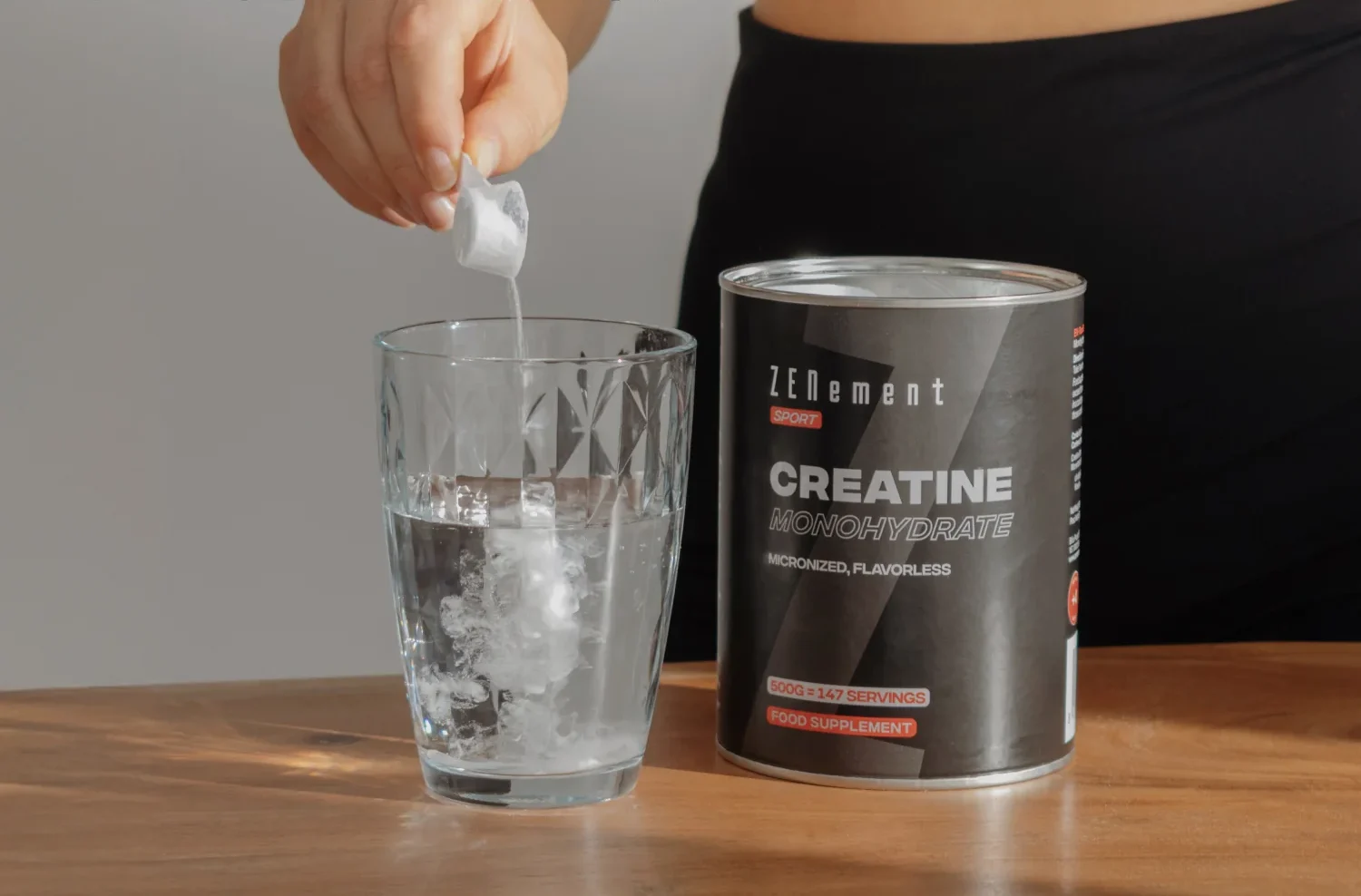
- The standard creatine monohydrate dosage is 3 to 5 g per day
- every day
- consistency matters more than the exact time
You can take it in the morning in water, in yoghurt, in applesauce, or after a meal if you prefer. No need to complicate it.
Personally, I use an additive-free micronised creatine monohydrate – simple, clean, easy to integrate every day.
Which creatine should you choose?
If you want to keep it simple and smart, aim for:
- creatine monohydrate
- micronised (better dispersion)
- without useless additives (no flavourings, no sweeteners, no fillers)
In practice: a neutral, clean powder, easy to mix, and that is all.
What I like
- Simplicity
- Solid scientific basis
- Useful at 25 as well as after 35
- Low cost per dose
What I wish
- An image less associated with bodybuilding
- More education around muscle prevention
My routine
I see it as a foundation. A background support integrated into a broader routine: movement, sleep, enough protein, exposure to natural light.
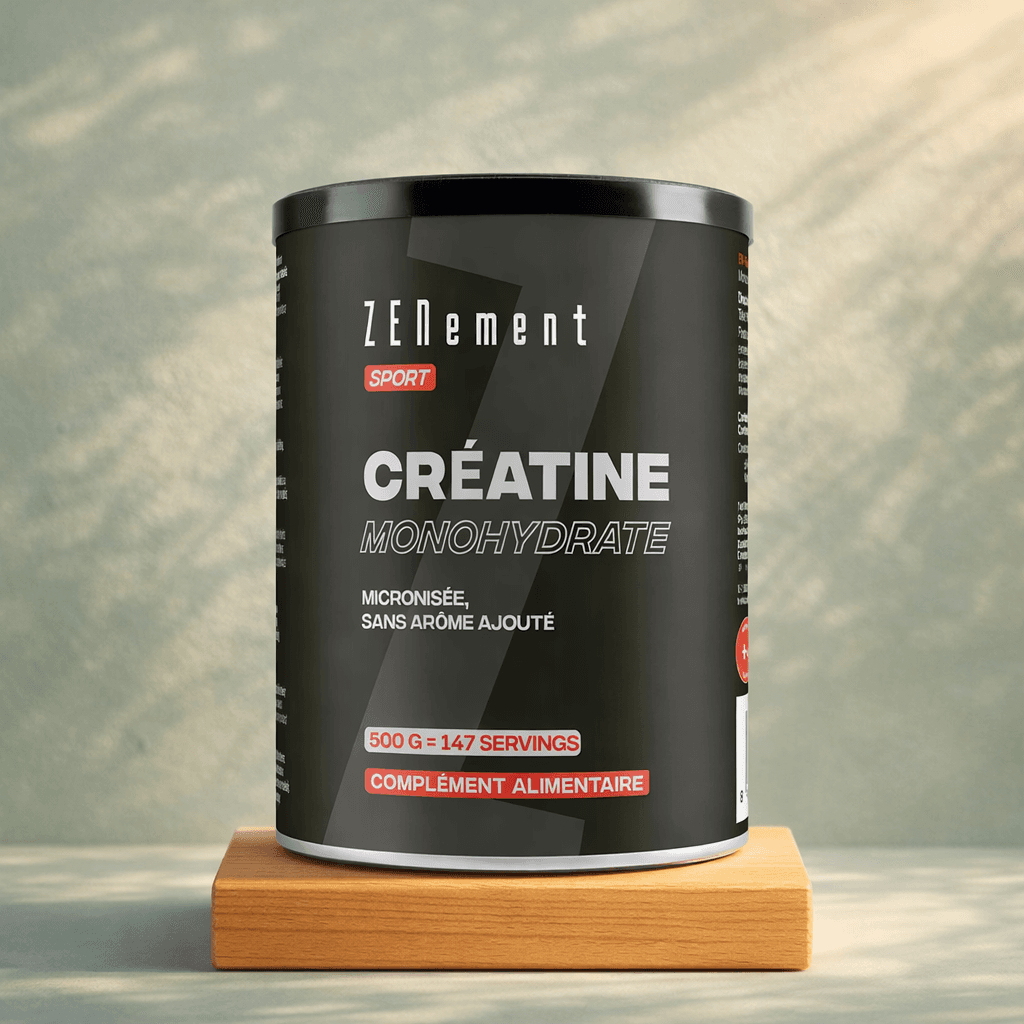
Discover the creatine I use
Pure creatine monohydrate, micronised, no additives.
Tip: start simple (500 g), then move to a long-term format if you truly integrate it.
Safety
The safety of creatine monohydrate is well documented in the scientific literature. Available data suggest a good safety profile in healthy adults at standard doses.
To discuss medically in case of kidney disease, or if you have any doubt.
Scientific sources
-
Regulation (EU) No 432/2012
– authorised health claims (creatine and performance). -
Kreider RB et al.
– International Society of Sports Nutrition position stand: safety and efficacy of creatine supplementation.
Transparency: some links may be affiliate links. Our opinions remain independent and based on real use, and on the wish to share the experience of products we genuinely use and truly love.
Written by Pedro R. – Ibiza